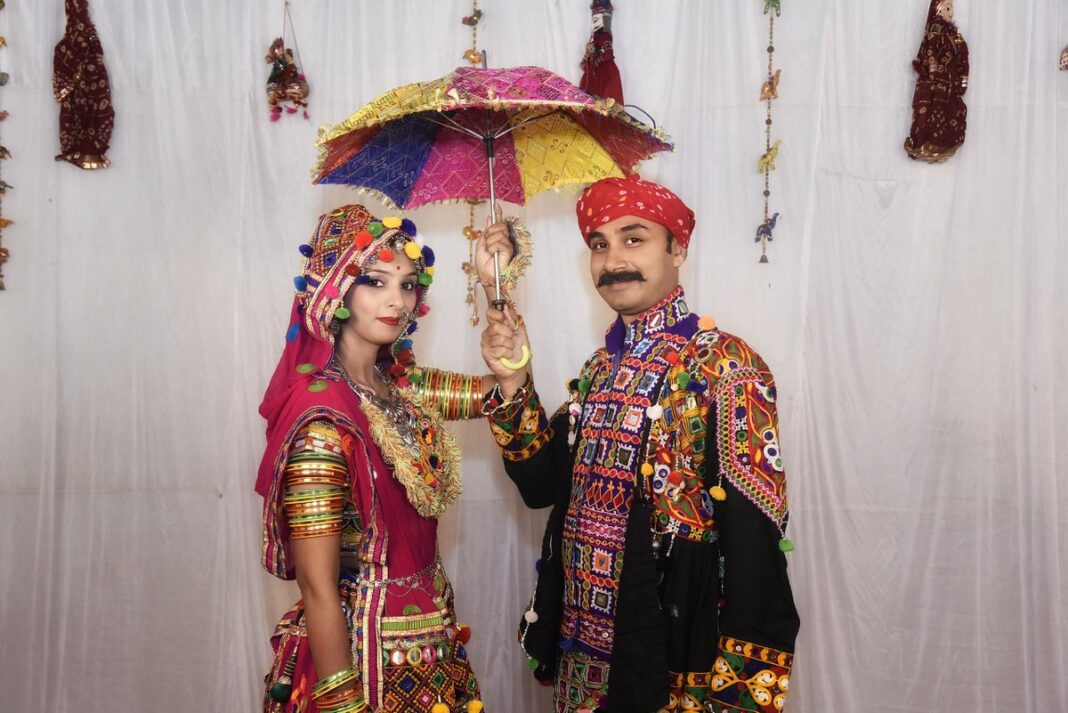
Gujarat, in the west of India, is known for its great cultural heritage, which we also see in its colourful festivals and unique traditional attire. Gujrati’s use bright colours, detailed embroidery and mirror work, which stand out in traditional Gujarati dress.
Traditional Dress of Gujarati Men
Gujarati males tend to wear what is both practical and cultural for them. As for what they wear:.
Kediyu and Dhoti:
The Kediyu is a piece of clothing that is pleated, frilled and has long sleeves; it also includes mirror work and embroidery. It is paired with a dhoti, a large rectangular fabric that is wrapped around the waist and legs. This set is very popular during festivals like Navratri.
Chorno (Chorno Pyjama):
Some men choose to wear chorno, which is a loose-fitting trouser that tapers at the ankles.

Turban (Phento or Pagdi):
A turban, which is called phento or pagdi, is a key component of traditional male wear. Also, it is tied in many different styles and colours, which in turn present regional or community identities.
Accessories:
Men also wear cotton and silk stoles, which they call gamchha or safa, and the traditional footwear they put on is mojris or jutis.
Traditional Dress of Gujarati Women
Gujarati women’s wear is very colourful and artistic. They are not only in that it is beautiful, but also tell stories through embroidery, designs and colours.
Chaniya Choli:
The most iconic traditional wear is the Chaniya Choli, which is what one sees worn out during festivals. It has a pleated skirt (chaniya) which fits tight at the top, a close-fitting top (choli) and a dupatta (odhani). Also very much into heavy use of mirror work, beads and vivid thread work. What you see of this outfit varies by region in Gujarat, which in turn reflects the local style.

Saree in Gujarati Style:
Marriage in the Gujarati culture sees the bride in the traditional saree, which is worn in a unique drape that brings out the beauty of the pallu, which is draped from back over the right shoulder. Also, the sarees are in Bandhani (tie and dye), Patola (handwoven silk), or cotton, which are designed with very fine and detailed borders.
Jewellery and Accessories:
Traditional pieces of jewellery like silver anklets, bangles, earrings, and nose rings add grace to the attire. Also, women wear bindi, armlet, and waist belt for special occasions.
Cultural Importance
Gujarati traditional wear is out of the question, as clothing they are symbol of community identity, social status, and regional pride. In the folk dances of Garba and Dandiya, at weddings and festivals like Navratri, Diwali, and Makar Sankranti, you see these garments take centre stage. Also, the fabrics used, the stitch styles, and the motifs present are of natural, mythological and daily life inspired elements.
Conclusion
Gujarat’s traditional clothing is a display of the state’s culture. From the festive Kediyu-Chorno to the elegant Chaniya Choli, what stands out in Gujarati wear is the presentation of the region’s art, which also happens to be very comfortable.


Leave a Reply