
India has a very diverse range of ecosystems which include critical elements like forests that play a key role in maintaining biodiversity, regulating climate, and supporting local economies. Also in 2025, India is still very much into the conservation of its forests and afforestation. Forest cover in the country reports at about 24% of total land area which also sees large-scale and ecologically important forests in each state. Also check out our report on the top 10 largest forests in India in 2025 which also looks at their size, biodiversity, and environmental importance.
1. Sundarbans Mangrove Forest in West Bengal.
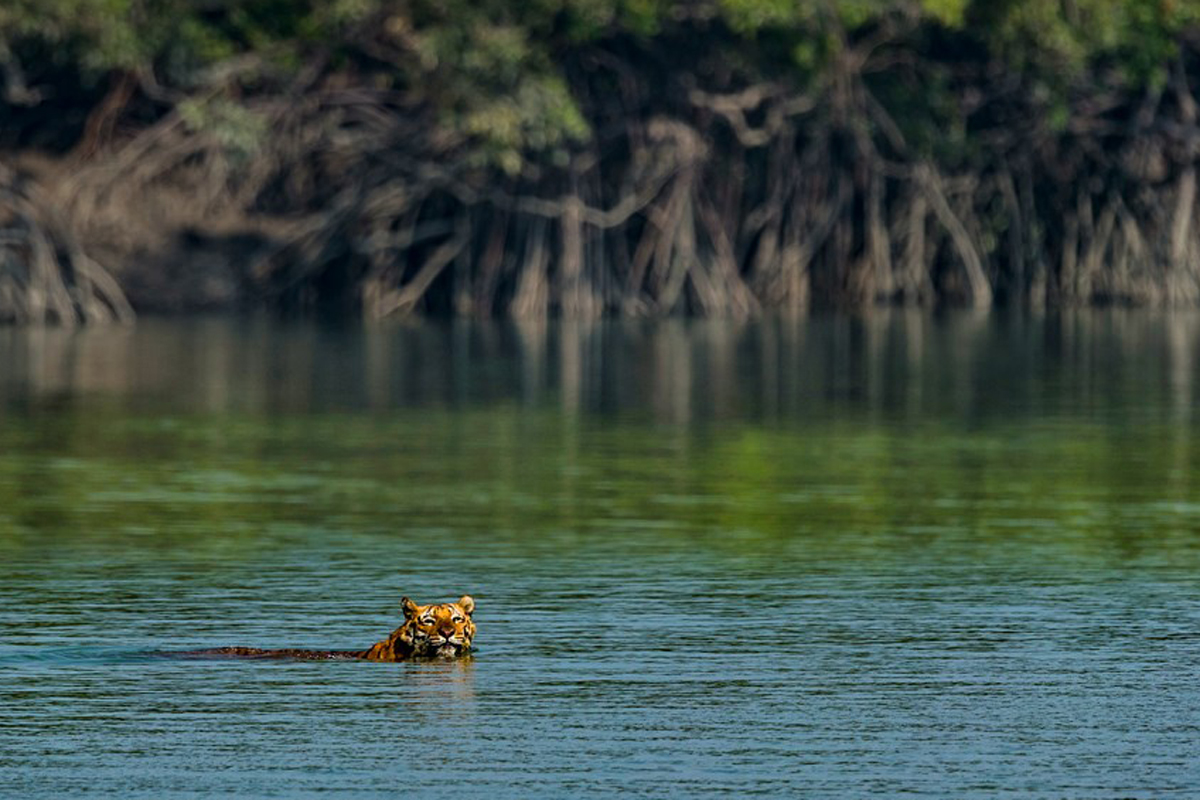
The Sundarbans which is to have the greatest extent of any single mangrove forest in the world and also the largest in India. Over a 10,000 square kilometer area, which is which of West Bengal. A UNESCO World Heritage Site it is known for the Royal Bengal Tiger, saltwater crocodiles, and an assortment of bird species. Also, it is very much a bio shield for the coast and home to thousands of species in its tidal environment.
2. Gir Forest (Gujarat)

Gir Forest which extends over an area of approximately 1,412 square kilometers is the only natural home of the Asiatic lion. It is a dry deciduous forest which has teak, jamun, and babul trees, and is also home to a great variety of wildlife which includes leopards, hyenas, and over 300 species of birds. It is a symbol of ecology and culture in Gujarat.
3. Dandeli Forest (Karnataka)
Located in the Western Ghats, Dandeli forest stretches over an area of around 1,200 square kilometers. This forest is home to species of evergreen and semi-evergreen trees, also reported to have black panthers, elephants, and hornbills. Also included in the protected areas are Dandeli Wildlife Sanctuary and Anshi National Park which in turn present the region’s great ecological wealth.
4. Kaziranga Forest (Assam)

Kaziranga is at present a UNESCO World Heritage Site and a large forest area in Assam which covers about 1,090 square kilometers. It is home to the greatest population of Indian one-horned rhinoceros. Also in the park, you will find a tiger, an elephant, and a very diverse bird life.
5. Jim Corbett Forest (Uttarakhand)
Jim Corbett National Park which is the oldest in India is a part of the larger 1,318 square kilometers Corbett Tiger Reserve. Set in the foothills of the Himalayas this forest has sal and teak trees and is also home to tigers, elephants, and hundreds of bird species.
6. Simlipal Forest (Odisha)
Simlipal Tiger Reserve in Odisha which is over 2,750 square kilometers in area is one of the largest forested areas in eastern India. It has dense sal forests, grasslands, and over 1,200 species of flowering plants. There one may see tigers, elephants, and Indian bison.
7. Kanha Forest (Madhya Pradesh)
In Kanha National Park which covers an area of 940 square kilometers, we also see buffer zones that expand its range. Kanha is home to dense sal and bamboo forests and is a major habitat for the barasingha (swamp deer). Also, we find a large tiger population.
8. Periyar Forest (Kerala)

Located at the foot of the Western Ghats, Periyar Forest in Kerala which is about 925 square kilometers in area. Also known for Periyar Wildlife Sanctuary which has great evergreen forests and is home to elephants, tigers, gaur, and a large diversity of bird species. The Periyar Lake also plays a role in its beauty and ecological value.
9. Bandipur Forest (Karnataka)
Bandipur National Park covers over 874 square kilometers and is a part of the Nilgiri Biosphere Reserve. The forest is home to tigers, elephants, and sloth bears as well as a great diversity of flora. It connects with Nagarhole, Mudumalai, and Wayanad forests which in turn form one of the largest protected forest tracts in South India.
10. Satpura Forest (Madhya Pradesh)
Satpura which spreads over an area of 1,427 square kilometers is home to Satpura Tiger Reserve. These forests present a unique setting of rough terrain, sandstone peaks, and dense vegetation. In this biodiverse region, you will find tigers, leopards, wild dogs, and over 300 species of birds.
Conclusion
India has large and very diverse and ecologically rich forests. From the mangroves of Sundarbans to the extensive Satpura deciduous forests we see a great range in our green cover which is very much the base of India’s environmental health. We must put in continuous conservation efforts to protect these natural assets for the coming generations.




Leave a Reply