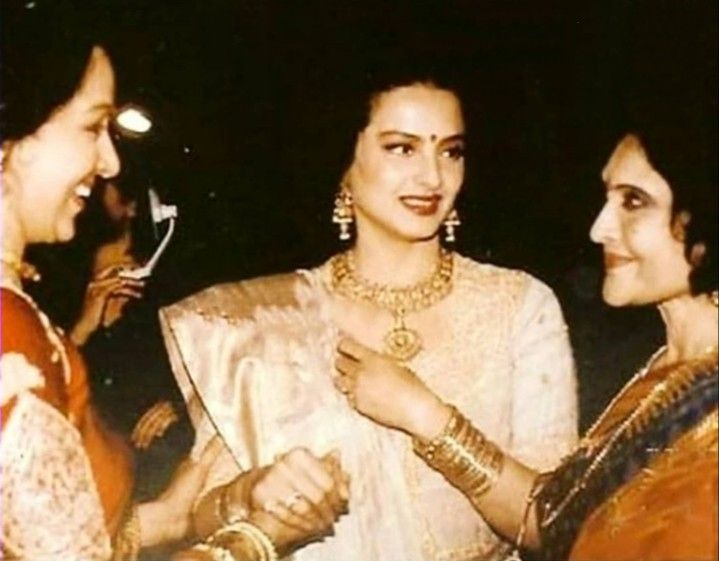
From Queens of the 70’s to Icons of the 90’s.
In the 1970s, audiences met a group of outstanding actresses who set new standards in Indian cinema in terms of charm, versatility and talent. Hema Malini, Rekha, Zeenat Aman, Jaya Bachchan, and Mumtaz took over the screens with their unique screen presence. By the 1990s, we saw a new set of stars that added to that legacy and, at the same time, transformed the industry in different ways. The shift from the queens of the ’70s to the leading ladies of the ’90s is a reflection of Bollywood’s change in aesthetic, story, and star power.
The 1970s Actresses: Their Powers and Style.
- Hema Malini was the epitome of the “Dream Girl”, which she won through her grace, classical dance skills, and ability to play romance and action roles.
- Rekha set a new standard in acting through her in-depth, complex characters, which still inspire present-day actresses.
- Zeenat Aman was progressive, contemporary and glamorous, which brought a city life flavour to Hindi film and broke traditional barriers.
- Jaya Bachchan did an excellent job of bringing to life relatable middle-class women.
- Mumtaz took the audience by storm with her energy, beauty and perfect screen presence in what seemed like all of her films.

These women in the spotlight with their style, dance numbers, and great roles, which in turn set the stage for the next generation of stars.
The Shift in the 1990s: A Starry New Age.
By the turn of the millennium, Bollywood had changed into larger-scale productions which included family sagas and romance-themed stories. Also at this time, female stars were expected to not only act in films but also to dance and project a glamorous image, which would in turn draw in global audiences.
- Sridevi dominated the ‘90s with great performances in Lamhe, Laadla, and Judaai. She became the highest-paid and most respected actress of that time.
- Madhuri Dixit became the preeminent symbol of the time, which she did with her stage presence, powerful performances and outstanding dance in hits like Beta, Hum Aapke Hain Koun! and Dil To Pagal Hai.
- Kajol, with her natural talent and expressive eyes, won over audiences in Dilwale Dulhania Le Jayenge and Kuch Kuch Hota Hai.
- Juhi Chawla brought life to the screen with her vibrant personality and great comedic timing.
- Karisma Kapoor broke out of the norm with bold roles, stylish choices, and dance numbers that defined that time.
- Tabu won over critics with award-winning performances in commercial and parallel cinema.
- Raveena Tandon won over fans with her charm, songs, and emotional range.
- Urmila Matondkar made waves with her bold and stylish image in Rangeela.

A Tale of Love and Bombay.
Aishwarya Rai came onto the scene in the late 90s with a blend of grace and beauty, which in turn opened doors for her international success.
Impact of the 70s on the 90s.
Zeenat Aman’s boldness put into practice the glamorous looks of the ‘90s; at the same time, Rekha’s complex characters got other actresses to play more in-depth roles. Hema Malini’s large-than-life persona shaped that of Madhuri and Sridevi’s, which came later. The confidence, style and charisma of the ‘70s stars, which were remarkable, helped to mould how female stardom grew in the ‘90s.
Conclusion
From the ‘70s to the ‘90s, we see the growth of female stardom in Bollywood. Queens of the ‘70s set the stage with their grace, bold choices, and dominant presence. In the ‘90s, we see that legacy play out as the actresses of that time redefined what glamour, dance, and acting are for a new audience. Together, those two decades produced some of Bollywood’s most iconic heroines who still to this day influence how women are portrayed on screen.


Leave a Reply