

Cricket comprises, in that case, the triad of batting, bowling, and fielding, with the last one deciding the match evenly. Depending on the format, the type of bowler, and the batter’s style, every fielder on the ground has a specific duty to perform. While the majority of fans are aware of the basic rules, a lot of them don’t have a clue about the intricate field placements that contribute to the strategic and captivating nature of cricket.
The cricket field has three major parts — the close-catching zone, the inner circle, and the outfield. Each area has its own significance:
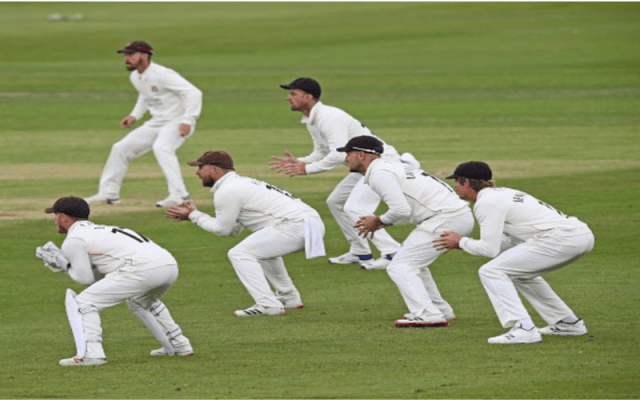
Close-catching positions are created to catch fast edges and are located 15 yards from the batsman.
Inner circle fielders (around 30 yards) prevent easy singles.
Outfielders are the ones who would be positioned in the extreme parts of the field, and their main duty is to prevent powerful hits and save runs.
First, let’s get into the details of the primary fielding positions in cricket, and at the same time, we will also see their significance.
1. Wicketkeeper

The wicketkeeper is the person who is positioned right behind the stumps, always prepared to grab the ball or stump the batter. When the fast bowlers are bowling, they usually stand 20 meters behind the stumps, and when there are spinners, they come closer. A very good wicketkeeper can make a difference in the game by his quick reflexes and perfect glovework.
2. Slip

The slip fielders are the ones who are stationed next to the wicketkeeper, diagonally behind the batsman on the off-side. Normally, the teams have two to four slips depending on the conditions. They take the edges that come from the fast bowlers, so quick reactions and soft hands are a must. There is also a leg slip on the side of the batsman’s legs, but it is rarely used unless the batter frequently plays sweep shots.
3. Gully

The gully is a position that is occupied just beside the slips, and its function is to pick up edges that go wider off the bat. This position plays a major role early in a match or when the pitch is conducive to bowlers’ taking wickets. The gully fielder needs to be very vigilant because the catches might come out of nowhere and very fast.
4. Point
The point fielder is positioned square on the offside. Only agile fielders are placed here since the ball frequently races in this direction when batters cut or square-drive. Depending on the bowler, the fielder may stand at backward point or forward point.
5. Cover

The cover is the classical field position situated between point and mid-off. Elegant batters often lure the area with their charming cover drives. So, the teams place their most balanced fielder at this spot. There are a few variations, like a short cover (closer to the batsman) and a deep cover (near the boundary).
6. Third Man

The third man is the guy placed very far back behind the slips and on the boundary. This spot is very important in limited-overs cricket to stop late cuts or edges from going for four runs. In Test cricket, teams frequently give up this position for one more slip fielder.
7. Fine Leg

The fielder at fine leg, who is behind square on the leg side, is in charge of stopping deflections and sweep shots. Depending on the Kind of bowler, they might be standing in the circle (short fine leg) or near the boundary (deep fine leg)
8. Mid-Wicket

Mid-wicket lies on the leg side between square leg and mid-on. This fielder prevents quick singles and stops flicks and drives played off the hips. Strong fielders are placed here to cut off boundaries through the gap.
9. Mid-Off and Mid-On

Both mid-off (off-side) and mid-on (leg-side) fielders guard straight drives and long hits down the ground. Captains often position themselves at mid-off to discuss strategies with bowlers.
10. Square Leg

Positioned at a right angle to the batsman on the leg side, square leg is an active spot, especially against pull and sweep shots. An umpire usually stands near this region during play.
About the Author


