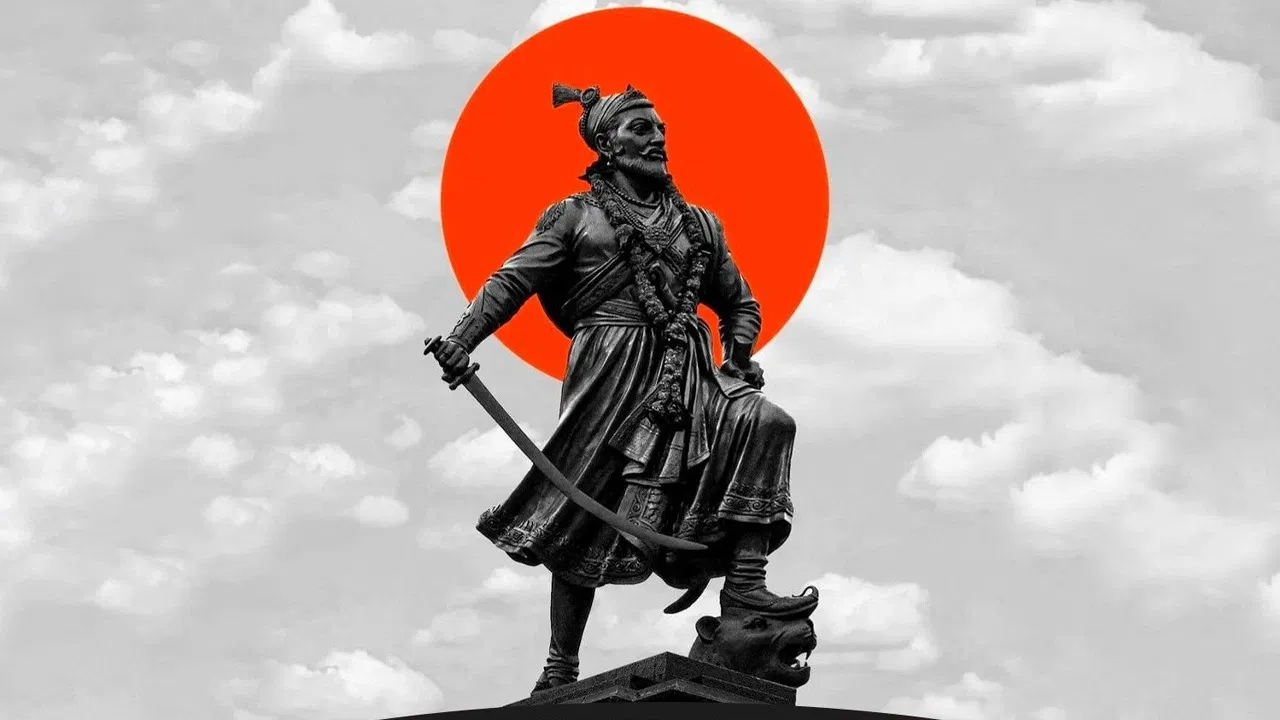
The Maratha Empire’s story is not fully told without that of Chhatrapati Sambhaji Maharaj, the eldest son of the great Shivaji Maharaj. His life, which was a weaver of valour, tragedy, and resilience, still captures the imagination of large audiences. But what we see today in popular retellings is a simplified version that does not present the full picture of his reign. To do justice to his legacy, we must look beyond the myths and into the true stories of the warrior king.
The Scholar Prince and the Throne
Born in 1657 on May 14th, Sambhaji is known to have been much more than a soldier, which is how he is often presented. He was also a learned man. His scholarship was wide-ranging from military tactics to politics, which he practised, and from art to which he was a patron. Also, he put to paper his literary works like “Budhbhushanam”, which speaks to his command of the Sanskrit language.
Upon the death of Shivaji Maharaj in 1680, Sambhaji took the throne at a time of turmoil. The young Maratha state was weak, which at the same time had internal dissent issues and was also put upon by the expansionist Mughal Empire, which was ruled by Aurangzeb. While present-day accounts may play up the father-son relationship, historical records point out a relationship based on a common vision of Swarajya (self-rule), which at times was expressed in strategic differences.

Dispelling Internal Conspiracies
One of the most persistent of myths is that of what went on within the walls of the Maratha court. We see in popular tales the story which paints Soyara Bai, Shivaji’s wife and mother of Rajaram which is that she was a traitor to the cause and that she conspired with Aurangzeb against Sambhaji. But history tells a different story. It is true that she did favour her son Rajaram for the throne and also aligned with great nobles to support his claim, but there is, in fact, little to no evidence to support the idea of treacherous collaboration with the Mughals. These reports and stories are, in actuality, later additions that did not find their way into the primary records.
Warfare, Ethics, and the “Shiv Garjana”
Sambhaji’s military career saw him follow a strict ethical code, which he inherited from his father. Both kings, as reported by contemporary historians including Portuguese and Mughal chroniclers, did not participate in the harm of women or the destruction of religious structures like mosques, which at other times they may have been entitled to do in the heat of war. Instead, they stood out in an age of very violent conquest.
Also, it is a fact that in popular culture, we see the “Shiv Garjana” or specific theatrical battle cries put forward as products of Sambhaji’s time. What we find in reality is that the use of “Har Har Mahadev” goes back to his grandfather, Shahaji Maharaj. That phrase, which stands for victory through Lord Shiva, was a tradition of the Bhonsle family long before it was considered a new invention.
The Conflict with Aurangzeb
The issue of Sambhaji’s final conflict with Aurangzeb is put forth largely in terms of religious persecution. While religion played a role, what was really at issue was political dominance. Aurangzeb was out to break Maratha resistance and expand into the Deccan. Sambhaji’s capture at Sangameshwar in 1689 and his later execution were for his refusal to give up Maratha forts and his defiance of Mughal authority.

In 1689, he was put to torture and killed on March 11th, which was brutal, yet his unyielding stand became a catalyst for the Marathas. After his death, which also saw the capture of his wife, Yesubai, and son, Shahu, the latter did what he could to return in 1707 at the time of Aurangzeb’s death to take back Maratha leadership.
Conclusion
Chhatrapati Sambhaji Maharaj’s nine-year reign was a study in how to defend sovereignty in the face of great challenge. By looking past the sterile or dramatic tellings of history, we see a complex man who is at once flawed and very much a hero. His true legacy is in his proven track record of standing up to the Mughal Empire, which in turn preserved the fire of Swarajya for the coming years.




Leave a Reply