

Trikonasana, also referred to as the Triangle Pose in yoga, is a basic standing pose that focuses on stretching, balance, and breathing. The name Trikonasana has been derived from the Sanskrit words trikona, which means triangle, and asana, which means pose. In this pose, the body is shaped in a triangular fashion while maintaining stability in the legs.
Trikonasana, because of the involvement of different muscle groups, forms a part of the list of poses that beginners and intermediate practitioners perform. In addition to increasing flexibility, Trikonasana helps with posture, mobility, body awareness, and relaxation.
What is Trikonasana?
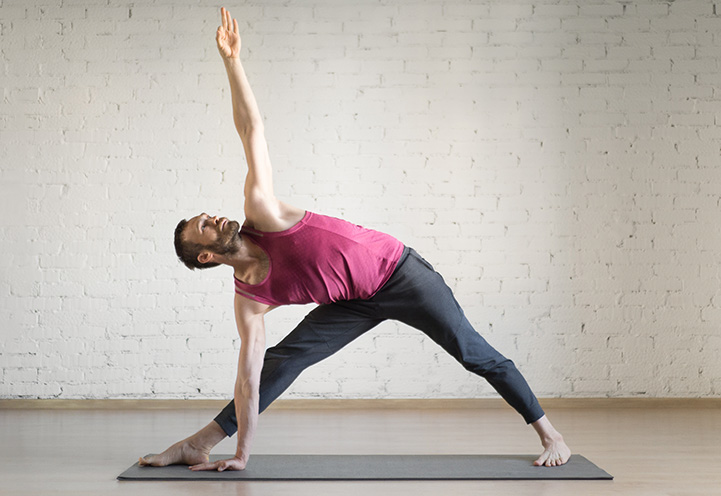
The process of performing Trikonasana involves standing with legs placed wide apart and turning one leg outward, with arms extended to the sides. The torso is then extended sideways towards one side of the body, while one arm is stretched down towards the floor or towards the leg, and the other arm is positioned vertically upwards.
Trikonasana, as against some poses which mainly serve the purpose of relaxation, provides benefits of strength development along with stretching. Legs are actively involved throughout the execution of the pose and core is used to keep the torso stabilized, while the chest remains open. The posture stretches the hamstrings, calves, hips, groin and sides of the torso.
People who spend long hours sitting may develop stiffness in these areas. Practising this asymmetrical standing position regularly improves the range of movement and makes simple actions like bending, moving and twisting easier.
Strengthens the Legs and Core
Trikonasana is a stretching posture that is full of muscular engagement. The quadriceps, gastrocnemius, and ankle muscles act together to stabilize the body, while the muscles of the abdomen and side core keep the posture of the person in check.
Having stronger core muscles leads to better posture in daily life and extra support of the spine.
Encourages Better Posture

A modern person leads a sedentary lifestyle that is associated with a lot of time sitting with the computer and with the shoulders rounded. However, the triangle pose opens up the chest and elongates the back in addition to engaging the muscles of healthy posture.
Practicing Trikonasana correctly improves a person’s ability to feel the alignment of the spine, shoulders, and hips, which subsequently makes it possible to improve default standing and sitting positions.
May Improve Digestion
The side stretch and the contraction of the abdominal muscles of the yoga pose stimulate the digestive organs.
Even though performing Trikonasana cannot be regarded as a cure for digestion problems, it can contribute towards maintaining good digestion and keeping the bowel regular if practiced on a regular basis.
Promotes Better Balance and Coordination
Practicing the pose calls for the awareness of body position and careful distribution of weight across the two legs. This can develop proprioception and help people understand their body position in space much better.
Improving balance can be especially beneficial for older people as balance is key to falling less often while getting older.
Helps Relax and Manage Stress
By practicing slow breathing when doing Trikonasana, people can become more mindful. Focusing on the posture and breath while doing yoga will help remove distractions and create more calm.
Yogic practices that include movement with controlled breathing can be a part of larger stress control programs.
Creates Space in the Chest and Shoulders

While moving the arm upwards and twisting the chest, shoulders and upper body receive a good stretch. This can help people suffering from tension built as a result of desk work or prolonged computer usage.
An open chest position can also make it easier to practise deeper, more controlled breathing.
How Long Should You Hold Trikonasana?
Beginners can usually hold the pose for around 20–30 seconds on each side while breathing normally. With practice, the duration can gradually increase to approximately one minute.
Quality is more important than duration. Maintaining proper alignment without forcing the body is safer than stretching aggressively.
Precautions and Possible Discomfort
Incorrect technique may cause strain in the hamstrings, lower back, neck, knees, or shoulders. People should avoid forcing the lower hand to reach the floor if flexibility is limited. A yoga block can provide additional support.
Those with significant spinal injuries, severe balance problems, uncontrolled blood pressure or recent surgery should seek professional guidance before practising. Anyone who experiences sharp pain, dizziness or breathing difficulty should stop the pose.
About the Author


4 thoughts on “Health Benefits of Trikonasana In 2026”